BMW N20 Engine
BMW N20 (2011-2017): specifications, power by application and every car that has it.
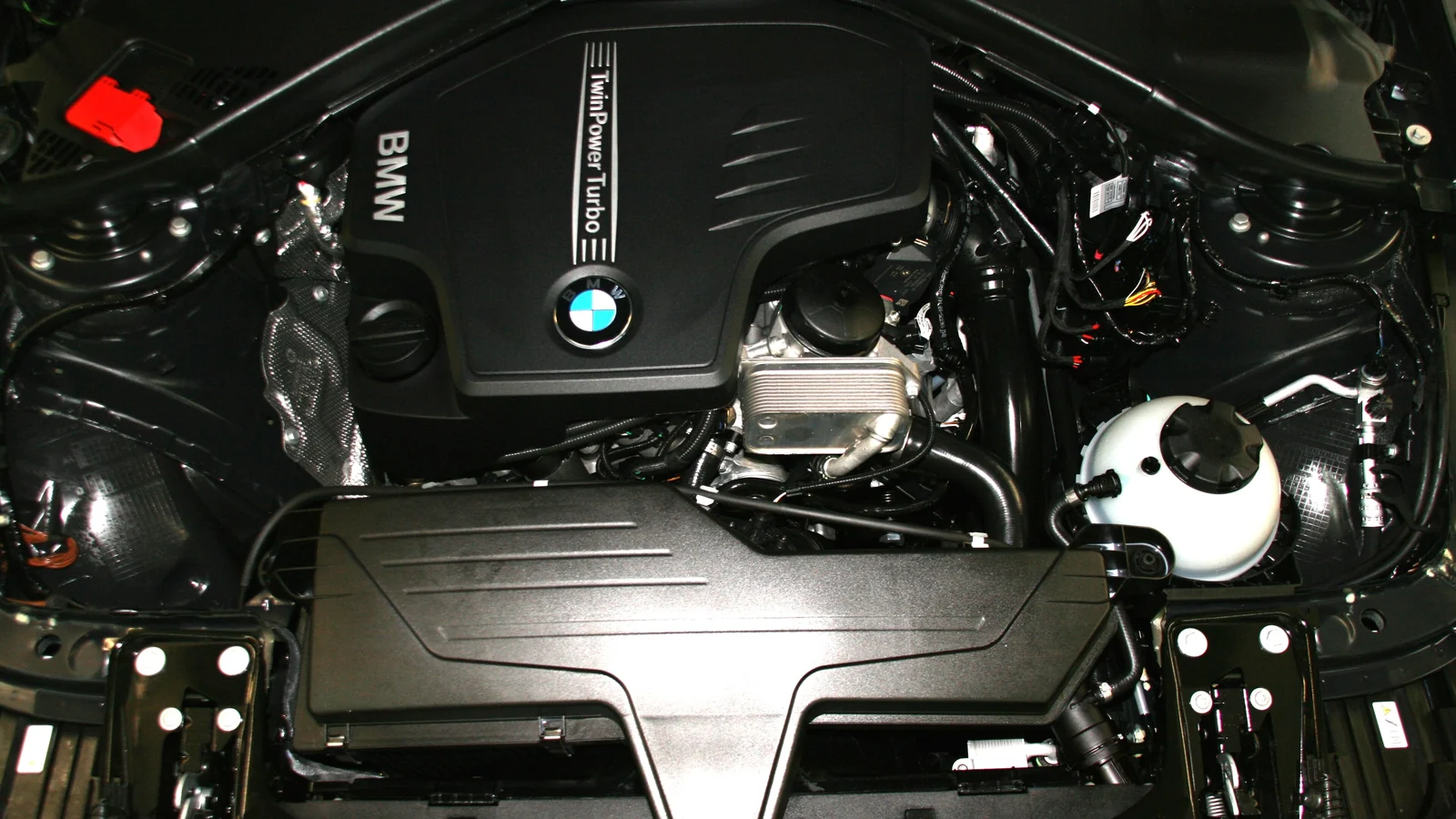

- Displacement
- 2.0 L
- Layout
- Inline-4 turbo petrol
- Power range
- 180–241 hp
- Produced
- 2011–2017
The N20 is BMW’s 2.0-liter turbocharged inline-four, built from 2011 to 2017. It is the engine that put a four-cylinder behind the 28i badge for the first time, replacing a naturally aspirated six in cars like the 328i and X3 xDrive28i.
What the N20 is
A 2.0-liter four-cylinder with a twin-scroll turbocharger, direct injection and Valvetronic variable valve lift — the same combination BMW branded TwinPower Turbo across the range. In the 28i cars it produced 240 hp; in the 320i, a deliberately detuned version made 181 hp from the same hardware.
That detuned 320i is the clearest illustration of what the badge means at BMW. Same displacement, same engine family, 59 hp apart, and nothing on the outside of the car to tell you which one you are looking at except the number on the boot lid.
Where it was fitted
| Model | US model years | Output |
|---|---|---|
| 3 Series (320i, 328i) | 2013–2016 | 181–240 hp |
| 2 Series (228i) | 2014–2016 | 181–240 hp |
| X3 (sDrive28i, xDrive28i) | 2016–2017 | 241 hp |
| Z4 (sDrive28i) | 2012–2016 | 240–241 hp |
| 5 Series (528i) | 2016 | 241 hp |
The figures come from EPA certification records behind our specification pages, which is why the same engine appears as 240 hp in one model year and 241 hp in another — that is the certified number changing, not the engine.
BMW also fitted the N20 to the 428i, the X1 xDrive28i and, outside the United States, to a longer list of cars this archive’s certified data does not cover.
The four-cylinder 328i
For most of its life the 328i badge meant a naturally aspirated straight-six. From 2012 it meant this turbocharged four. The 2013 3 Series brochure in this archive is the document that made the change official for US buyers, and the specification pages for those years carry both the engine and the certified economy figures side by side — which is the honest way to see what the swap bought and what it cost.
What we do not publish
No reliability score, including for the timing chain question this engine is best known for. NHTSA records complaints against a vehicle, not an engine: a 2014 3 Series could have this four, a six or a diesel, and the complaints for all of them sit in one bucket. Splitting that bucket by engine is guesswork, and a guess presented as a number is worse than no number.
Common questions
How much horsepower does the N20 have?
240 to 241 hp in the 28i cars, and 181 hp in the 320i. The variation between 240 and 241 is a certification difference between model years, not a change to the engine.
Which BMWs have the N20?
In the United States: the 320i, 328i, 228i, 428i, 528i, X1 xDrive28i, X3 sDrive28i and xDrive28i, and the Z4 sDrive28i.
Is the N20 a four-cylinder?
Yes — 2.0 liters, four cylinders, one twin-scroll turbocharger. It replaced the naturally aspirated N52 six in the 28i cars.
What replaced the N20?
The B48, BMW’s modular 2.0-liter four, from around the 2016 model year onwards depending on the car.
Sources
Model years and outputs from EPA certification data, with the source named on every specification page. The 2013 3 Series brochure is held in this archive.
Cars with this engine
Years and output by model
| BMW 2 Series | 2014–2016 · 181–240 hp |
| BMW 3 Series | 2013–2017 · 180–240 hp |
| BMW 4 Series | 2014–2016 · 241 hp |
| BMW 5 Series | 2012–2016 · 240–241 hp |
| BMW X1 | 2013–2015 · 241 hp |
| BMW X3 | 2013–2017 · 241 hp |
| BMW X4 | 2015–2018 · 240 hp |
| BMW X5 | 2016–2018 · 240 hp |
| BMW Z4 | 2014–2016 · 240–241 hp |