BMW 7 Series E23
BMW 7 Series E23 (1977-1986): specifications by trim, engines and model years.
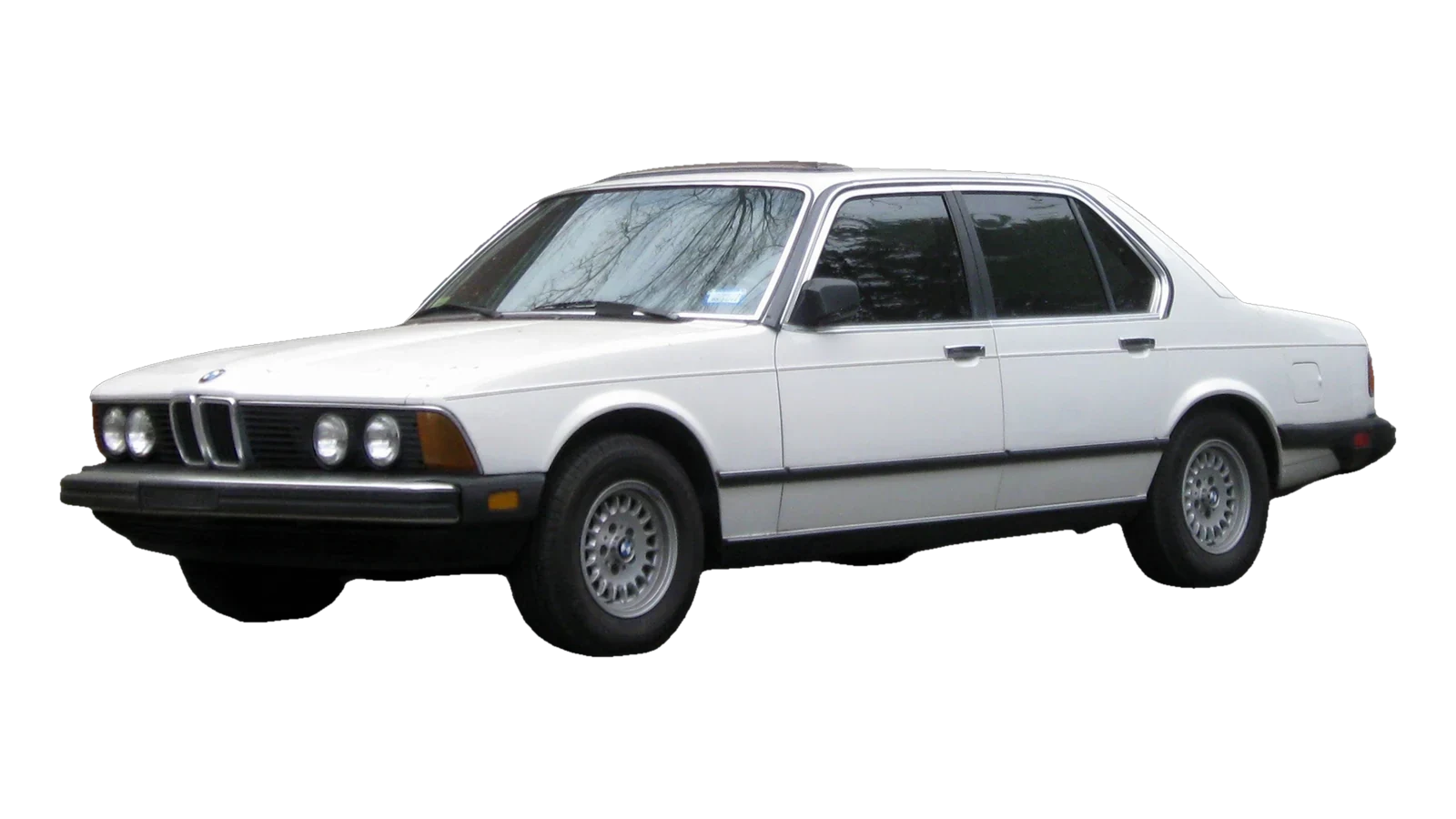
The E23 is the first BMW 7 Series, built from 1977 to 1986 and sold only as a four-door sedan. It is also a generation the public data sources do not reach: EPA fuel-economy filings, EPA certification records and Transport Canada specifications all start too late to cover it, so on this site there are no specification cards behind it. What we do have is better than a card for a car of this age — the original brochure BMW printed for American buyers.
What the 1985 brochure records
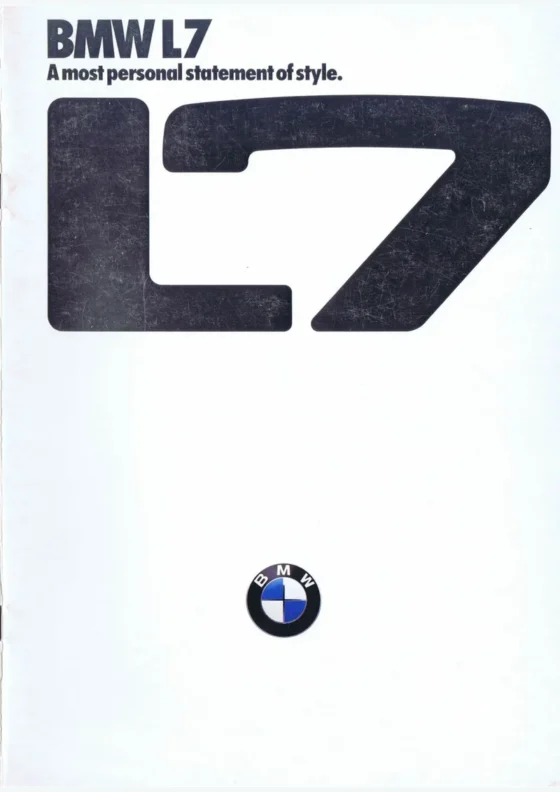
The 1985 brochure in our archive is for the L7, the most luxurious E23 sold in the United States, and its specification table is precise in a way later brochures are not:
| Item | As printed in 1985 |
|---|---|
| Engine | Inline six, 209 cu in, seven main bearings, 12 crankshaft counterweights |
| Output | 182 hp (SAE net) at 5,400 rpm |
| Torque | 214 lb-ft at 4,000 rpm |
| Compression ratio | 8.0:1, unleaded fuel |
| Fuel system | Bosch L-Jetronic injection with Motronic engine electronics |
| Brakes | Four-wheel discs with ABS |
| 0–50 mph | 6.0 seconds with the manual gearbox |
The engine is the M30, BMW’s big six of the period, and 209 cubic inches is its 3.4-liter version. The brochure is proud of the seven main bearings in particular, calling them unusual refinements in a luxury sedan. It also quotes acceleration to 50 mph rather than to 60; the figure cannot be converted into a 0–60 time, and we have not tried.
The electronics BMW sold it on
Most of the brochure is not about the engine. It is about four systems BMW presented as the car looking after its driver: Active Check Control, which watched the brake lights, low beams and fluid levels; the Service Interval Indicator, which set the service date by how the car was actually driven rather than by mileage alone; an energy-control gauge; and the on-board computer. ABS gets a page of its own, explained as the ability to keep steering while braking as hard as possible.
The idea behind the service indicator — servicing a car by how it is driven rather than by a fixed calendar — is the same one behind the Condition Based Service system of current BMWs.
Where it sits
The E23 was followed by the E32, and every later 7 Series is on the 7 Series page. Its contemporary below it in the range was the 5 Series, which shared the same family of six-cylinder engines.