BMW Isetta 250/300
BMW Isetta 250/300 (1955-1962): specifications by trim, engines and model years.
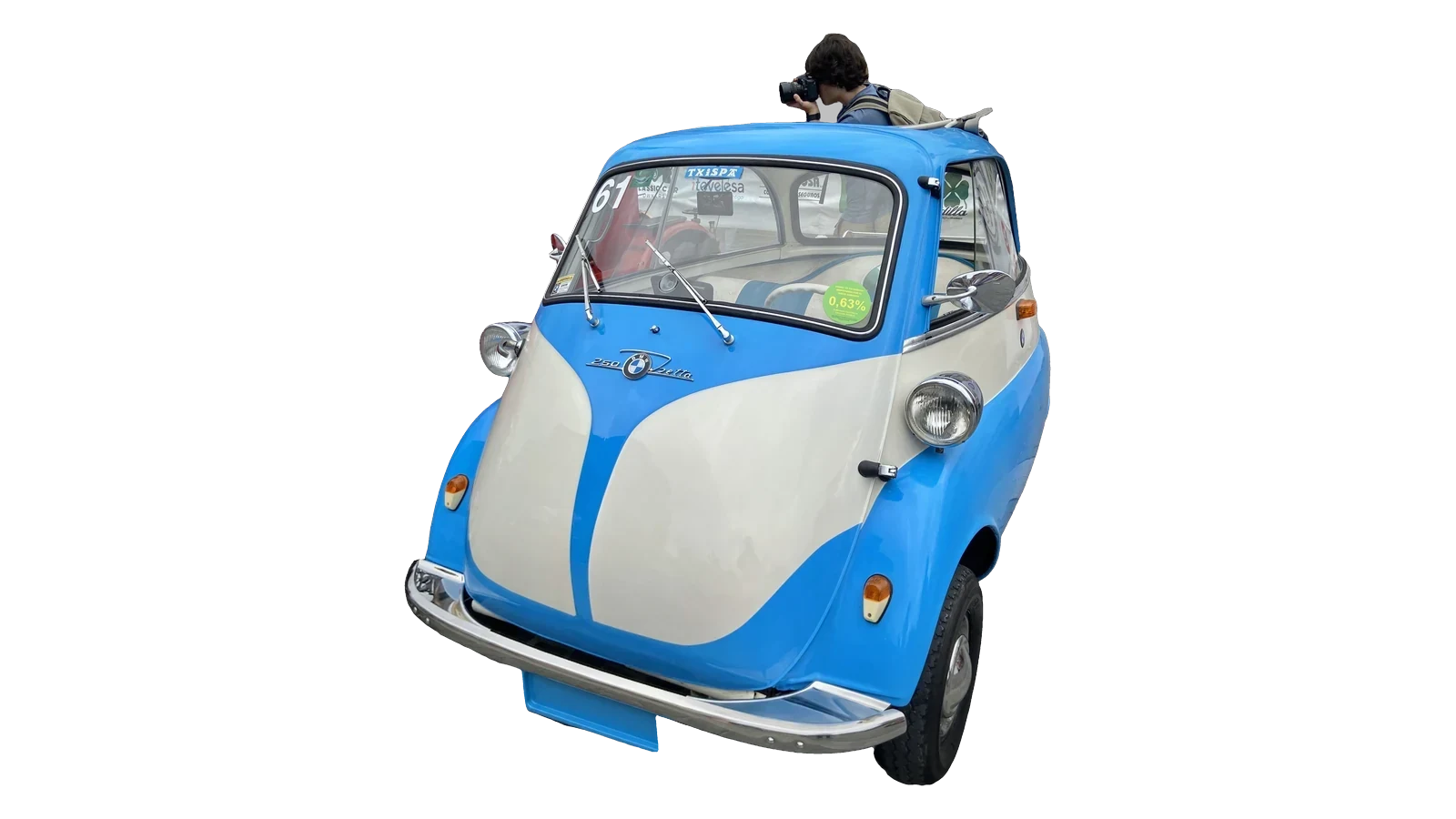
The Isetta 250 and 300 are the two versions of BMW’s bubble car, built from 1955 to 1962. The numbers are engine displacement in cubic centimeters — 250 cc and 300 cc — which makes this the smallest engine BMW has ever put in a car by a very wide margin.
The model’s story is on our Isetta page. This page covers the generation and what our archive holds of it.
The one historic document we have
Our archive contains an original 1955 Isetta brochure with the PDF intact. It is the oldest document in the collection by three decades, and the only brochure we hold for any of the seven BMW models that predate the American federal databases.
That single file is worth understanding correctly. Our American brochure archive is dense from the mid-2000s and effectively absent before it; the Isetta brochure is an isolated survivor rather than the beginning of a run. Nothing else from the 1950s, 1960s or 1970s is in the collection.
Scale
BMW sold more than 160,000 Isettas, and notes that “the two-seater was even in demand in the USA, the country of road cruisers”. Set against the 253 examples of the 507 built in overlapping years, the pair describes BMW’s problem in the 1950s exactly: volume without margin at one end, margin without volume at the other, and nothing profitable in the middle.
The New Class of 1962 was built to fill that middle, and the Isetta ended the same year.
Why there are no specification cards
American federal fuel-economy records begin in 1984, twenty-two years after this generation ended. The car is documented here from BMW’s own history and from our one brochure, not from the data our specification cards are built on.
Two engine sizes, one car
The split between 250 and 300 is displacement and nothing else — the same body, the same front-opening door, the same hinged steering column. BMW’s naming here follows the convention it used before chassis codes existed and before the series-digit system arrived with the E21 in 1975.
That makes the Isetta one of three naming eras represented in our plan: displacement names (Isetta, New Class), chassis codes (E, F, G, U) and the modern series numbers. We cover the last of those in BMW model names explained.
| Detail | Value |
|---|---|
| Versions | 250 and 300 — engine displacement in cc |
| Model years | 1955–1962 |
| Body | Microcar |
| Units sold | more than 160,000 |
| In our archive | one original 1955 brochure with PDF |