BMW N54 Engine
BMW N54 (2006-2016): specifications, power by application and every car that has it.
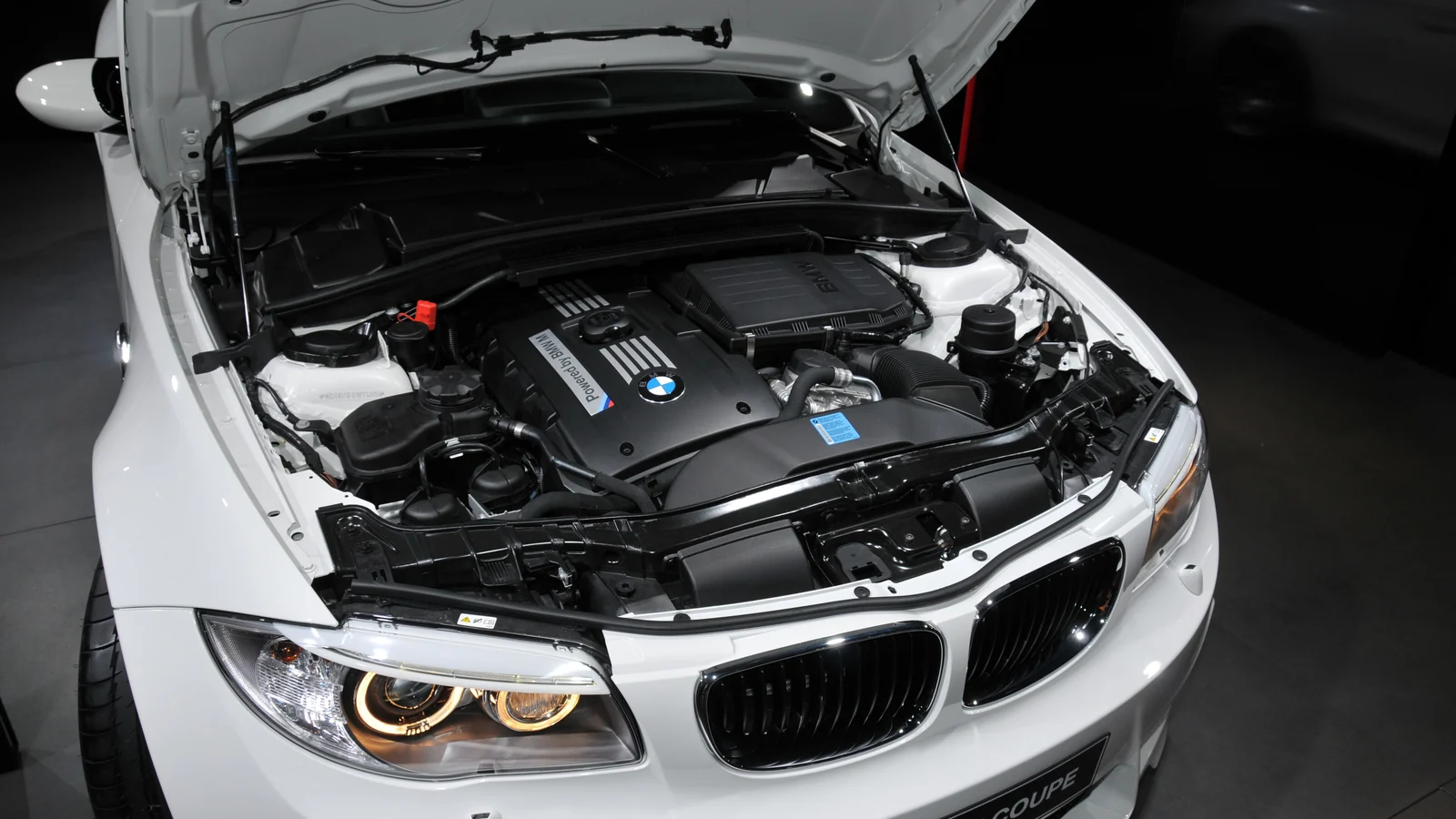

- Displacement
- 3.0 L
- Layout
- Inline-6 twin-turbo petrol
- Power range
- 300–335 hp
- Produced
- 2006–2016
The N54 is BMW’s 3.0-liter twin-turbocharged inline-six, introduced for the 2007 model year in the 335i. It was BMW’s return to turbocharging for petrol engines after two decades of naturally aspirated sixes, and it set the pattern every BMW six has followed since: forced induction, direct injection, 3.0 liters.
What the N54 is
A 3.0-liter inline-six with two turbochargers and direct injection. The 2007 3 Series brochure describes it as a “3.0-liter dual overhead cam (DOHC), 24-valve inline turbocharged 300-horsepower 6-cylinder engine with twin-turbo technology and Double-VANOS steplessly variable valve timing” — sold alongside the naturally aspirated N52 in the same showroom that year.
Every US application was certified at 300 hp and 2,998 cc. Unlike its successor, the output did not move: from the 2007 335i to the last Z4 sDrive35i, EPA records the same 300 hp throughout.
Where it was fitted
Figures below come from EPA certification records for the model years we hold.
| Model | US model years | Output |
|---|---|---|
| 1 Series (135i) | 2008 | 300 hp |
| 3 Series (335i) | 2007–2008 | 300 hp |
| 5 Series (535i) | 2008 | 300 hp |
| X6 (xDrive35i) | 2008 | 300 hp |
| Z4 (sDrive35i) | 2009–2016 | 300 hp |
BMW also used the N54 in the 740i and the 1 Series M. The years above are the ones for which our specification pages carry certified figures; the 335i and 535i moved to the single-turbo N55 from 2011, while the Z4 kept the N54 to the end of its run.
N54 or N55: how to tell which one you have
Both are 3.0-liter sixes rated at 300 hp in most cars, and both wear the same 35i badge. The difference is the turbocharging. The N54 uses two turbochargers; the N55 uses one twin-scroll turbo, which the 2011 3 Series Coupe brochure describes as combining “a twin-scroll TwinPower Turbo, High Precision direct fuel injection, and — in a first for turbocharged engines — BMW’s Valvetronic variable intake technology”.
As a rule of thumb for US cars: a 35i built through 2010 is an N54, and one built from 2011 is an N55. The Z4 is the exception — it stayed on the N54. If you need certainty for a specific car, its VIN identifies the model year, and the specification page for that year lists the recorded figures.
What we do not publish
We do not give the N54 a reliability rating. BMW does not publish failure rates, and the NHTSA complaints database records complaints against a vehicle rather than an engine — a 2008 3 Series in that database may be a 328i with the naturally aspirated N52 or a 335i with the N54, and the database does not separate them. Any number presented as “N54 complaints” was derived by guesswork somewhere.
Common questions
How much horsepower does the N54 have?
300 hp in every US application on record, from the 2007 335i to the last Z4 sDrive35i. Displacement is 2,998 cc.
Is the N54 twin-turbo?
Yes — two turbochargers. Its successor, the N55, uses a single twin-scroll turbo instead, which is a different arrangement despite the similar name.
Which BMWs have the N54?
In the US: the 135i, 335i, 535i, 740i, X6 xDrive35i, Z4 sDrive35i and the 1 Series M. The table above gives the model years our specification pages cover.
What replaced the N54?
The N55 from 2011, and in turn the B58 from 2016.
Sources
- BMW 2007 3 Series brochure: the engine description quoted above — 3.0-liter DOHC 24-valve inline six, turbocharged, 300 hp, twin-turbo technology with Double-VANOS.
- BMW 2011 3 Series Coupe brochure: the twin-scroll TwinPower Turbo description used to separate the N55 from the N54.
- EPA — Annual certification test data: rated horsepower, displacement and model-year coverage for US-certified cars.
Cars with this engine
Years and output by model
| BMW 1 Series | 2008–2010 · 300 hp |
| BMW 3 Series | 2007–2013 · 300 hp |
| BMW 5 Series | 2008–2010 · 300 hp |
| BMW X6 | 2008–2010 · 300 hp |
| BMW Z4 | 2009–2016 · 300 hp |